

What's the point of cleaning your list if cold contacts still convert?
A fair objection from a marketer who still gets the odd sale from "dead" segments, and the answers that hold up: what those contacts cost everyone else, why opens mislead, and how to clean without losing anyone.

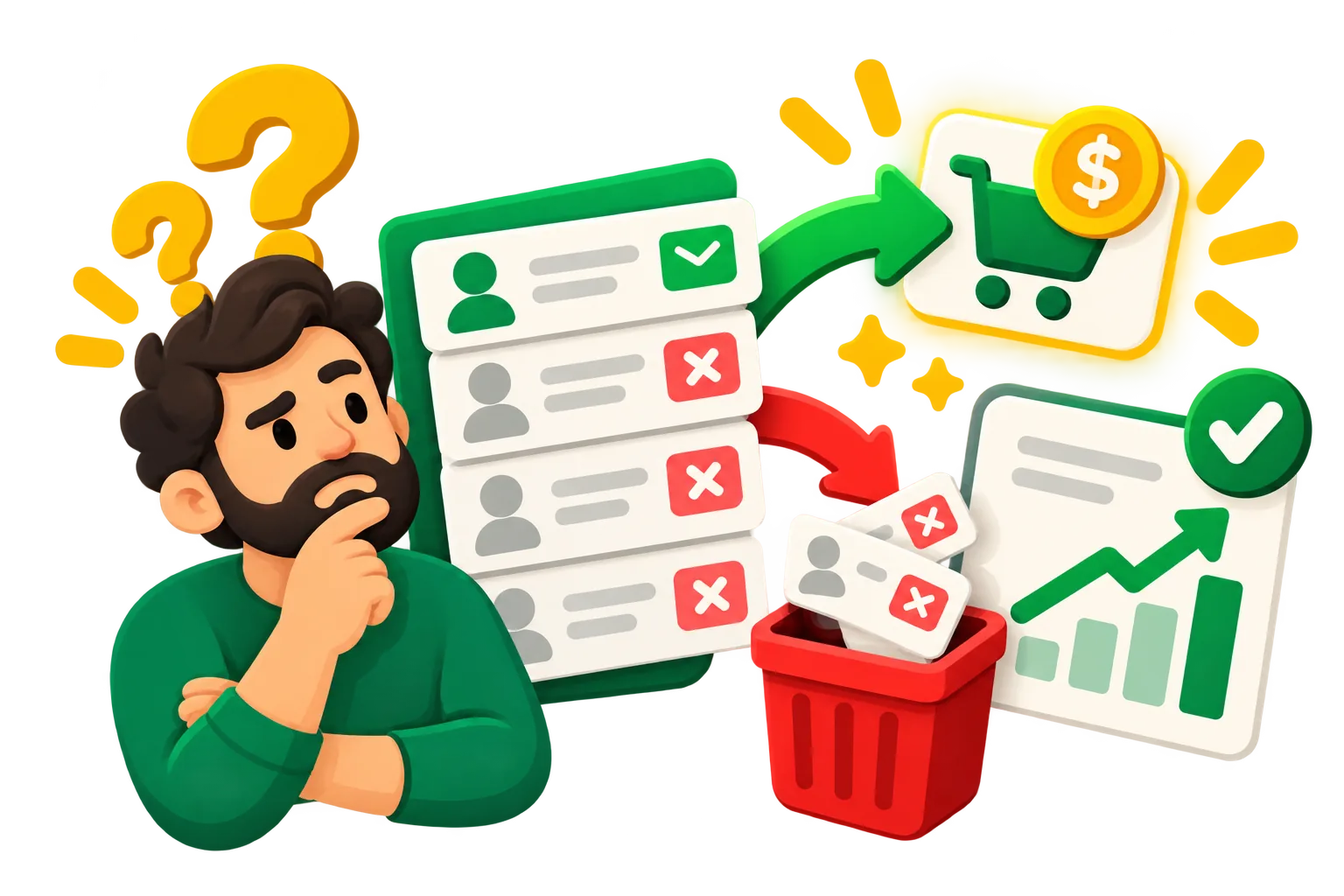
A marketer recently put the question plainly to a forum of peers. Their list keeps growing, conversion keeps sliding, and they've tried segmenting by new, old and cold. The trouble: every segment they wrote off still produces the occasional sale. So why remove anyone? “Besides my ego being bruised when the open rate gets lower, what is the point?”
It's the right question, and the thread that followed is the best short course on list hygiene we've read. Here is what it boiled down to.
The one-line answer
Sender reputation, brand reputation, and cost. Every other argument is one of those three in more words.
Bad contacts are poisoned M&Ms
The most upvoted reply used that image, and it stuck because it reframes the problem. The issue was never the cold contacts themselves. It's what they do to everyone else in the bowl.
Mailbox providers grade a sender by the engagement of the people it mails in a given campaign. Keep including a large block that never opens or clicks, and the rate that decides inbox placement drops, for the whole send. One spam trap, or enough dead addresses, can push your best converters into spam too. The occasional sale from the cold segment doesn't cover the placement you lose on the segment that was actually working.
Someone asked the sharper version of the question: what is the conversion rate of that “dead” group, really? If it's 0.05%, you're paying for a rounding error with your reputation, and providers throttle you well before the damage shows up on any dashboard.
Sending to people who don't want it is, functionally, spam
Providers expect marketers to mail people who asked for it. Mail people who don't react, and providers treat all of your mail as unwanted until you clean things up. The people who never open are also the ones most likely to hit “report spam” instead of scrolling to the unsubscribe link, and the bulk-sender rules of the biggest providers put the complaint ceiling around 0.3%. Your email platform will pause your sending long before your ego notices anything.
Your “cold” segment may be a definitions problem
This was the most useful correction in the thread. If cold means “didn't open”, the bucket holds two different people: the genuinely gone, and anyone whose mail app never loads images. The second group reads and buys and never registers an open. That is exactly what conversions from a dead segment look like.
Open rate stopped being a real number years ago, when a major mail app started pre-loading images: a good share of “opens” are its servers hitting the tracking pixel, not a person. So rebuild the segment on clicks before suppressing anyone. If the conversions follow the clicks, it was never decay. If they don't, clean with a clear conscience.
One more axis worth separating: new and old are ages, cold is an intent level. Mixing the two in the same breath is why the buckets never behave as expected.
Don't delete. Suppress, sunset, archive
Nobody in the thread argued for deleting. The consensus routine:
- Define inactivity by clicks, with a window of 90 to 180 days. If you can see site visits or purchases, count those as activity too: someone who gets the email and then types your address into a browser never registers a click.
- Carve out who deserves a pass. Recent subscribers haven't had a fair shot. Recent buyers, VIPs and big spenders stay in, whatever the rules say. Bounced and unsubscribed are out, no debate.
- Run one re-engagement pass. A short sequence, three to five emails at most, or a reactivation campaign once a quarter for a sunset segment. Judge it by clicks, not opens.
- Suppress or archive whoever stays silent. Their profile, history and consent stay intact. If they come back through a purchase or another channel, nothing is lost, and you can always add them back.
- Verify before you judge. An address that's no longer valid isn't cold; it's dead, and it bounces. Check validity before reading intent into silence.
Judge the cleanup by the right numbers
List size is a vanity metric. Measure the cleanup by inbox placement, complaints, and revenue per delivered email. A big list nobody reads costs more, distorts every report, and makes it harder to tell whether a campaign worked at all.
On Mailchimp, “costs more” is literal: the bill is set by contact count, in tiers. The contacts dragging your reputation down are on the invoice every month. Archiving them protects the domain and, once the list crosses a tier boundary, lowers the bill. That is the third word in the one-line answer.
Keep reading
 How to clean up your Mailchimp audience, step by stepA practical checklist to clean a Mailchimp list: back it up, clear unsubscribed and duplicate contacts, archive the inactive ones safely, and keep it clean every month.Ruth Williams ·
  How to archive contacts in Mailchimp, including in bulkStep by step: archive one contact, a whole group or every unsubscribed contact in Mailchimp, find them later, bring them back, and do it through the API.Ruth Williams ·